Mahkemelerin Gecikme, Verimsiz Çalışma (Disruption) ve Zarar - Ziyan (Quantum) Taleplerinde Beklediği İspat Standardı
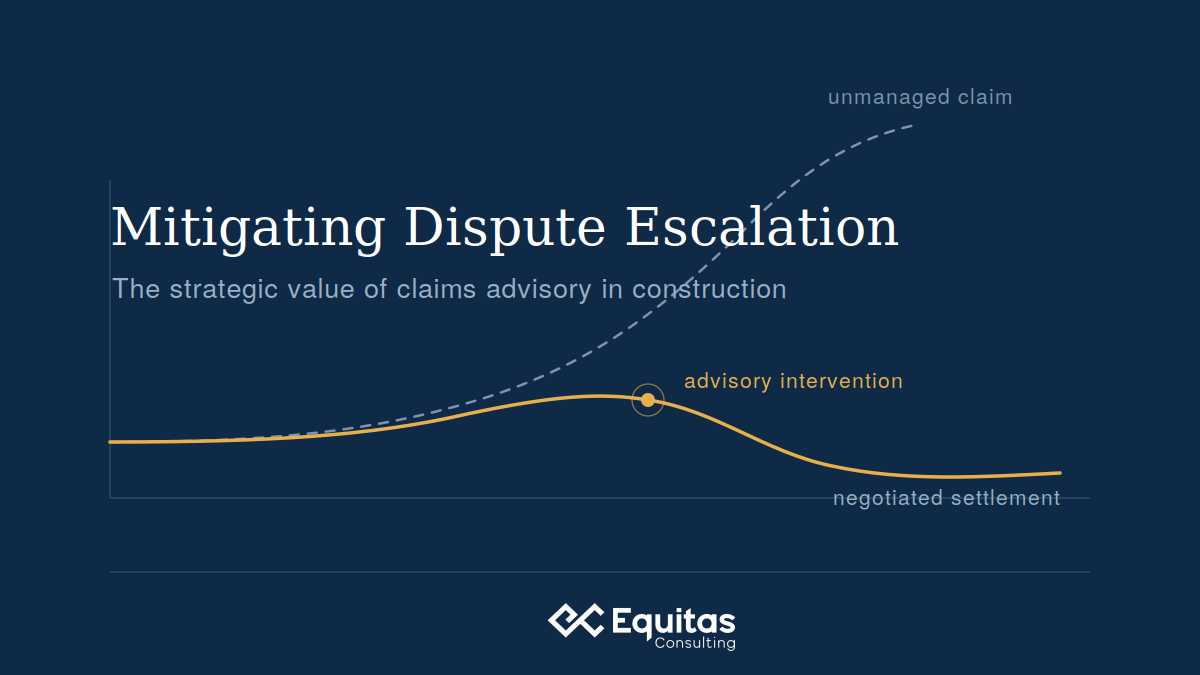
In the contemporary global construction landscape, disputes are frequently regarded as an inevitable byproduct of complex projects. Whether operating under FIDIC, JCT, or NEC contract suites, the tripartite pressures of time, cost, and quality often culminate in commercial friction. However, disputes rarely emerge ex nihilo; they are typically the result of unresolved claims, opaque communication, and a failure to address project variances in real-time. Unmanaged, these issues escalate into formal proceedings, necessitating the intervention of arbitration institutions such as the ICC (International Chamber of Commerce) or DIAC (Dubai International Arbitration Centre).
The Anatomy of Dispute Escalation
The transition from a project issue to a formal dispute is often a gradual process characterized by a breakdown in commercial trust. Escalation typically occurs when parties adopt defensive postures, often bolstered by poor contemporaneous records and a lack of substantiation regarding entitlement. When a contractor submits an Extension of Time (EOT) request that lacks a robust nexus between the delaying event and its impact on the critical path, the Employer or Engineer is likely to reject it. This rejection, often driven by the absence of forensic evidence, creates a vacuum where emotion and conjecture replace technical analysis.
Key Issues in Claims Management
One of the primary drivers of litigation and arbitration is the disconnect between delay analysis and quantum evaluation. In many instances, prolongation costs are calculated in isolation from the forensic schedule analysis, leading to a narrative that lacks internal consistency. Furthermore, the failure to adhere strictly to the notice provisions and time-bars inherent in modern contracts often prejudices a party’s legal position long before a formal dispute is declared. Without expert intervention, these technical failures harden the parties’ positions, making a commercial settlement increasingly elusive.
The Role of Specialist Claims Consulting
Effective claims consulting serves as a preventative mechanism by instilling technical rigour and objectivity into the commercial process. A specialist consultant acts to de-escalate tensions by grounding all discussions in the factual reality of the project records. By conducting a detailed review of entitlement and testing the causal links between events and effects, consultants provide a realistic assessment of a party’s position. This objective ‘reality check’ is essential for parties to understand the strengths and weaknesses of their cases before significant capital is committed to legal proceedings.
The Synergy of Delay and Quantum Experts
The most effective strategy for dispute avoidance lies in the integration of forensic delay analysis and quantum expertise. Delay experts utilize methodologies such as Time Impact Analysis (TIA) or Collapsed As-Built analysis to provide a definitive account of project progress and delays. Simultaneously, a Forensic Quantity Surveyor (QS) ensures that the valuation of variations and disruption claims is mathematically sound and contractually compliant. When these two disciplines are unified, the resulting claim is difficult to refute, providing a transparent basis for settlement that satisfies both parties’ internal governance requirements.
Practical Implications
The deployment of claims consulting services offers several strategic advantages for stakeholders in the construction sector. Primarily, it preserves the commercial relationship between Employer and Contractor, allowing project delivery to remain the focal point rather than the pursuit of Liquidated Damages (LADs) or the recovery of losses. Furthermore, the early resolution of claims significantly reduces the ‘dispute premium’—the exorbitant costs associated with legal fees, expert witness services, and the management time drained by prolonged litigation.
Key takeaways for practitioners include:
Early Engagement
Consultants should be engaged at the first sign of project distress or significant deviation from the baseline programme. Early intervention allows for the contemporaneous gathering of evidence, which is far more persuasive than retrospective reconstructions.
Evidence-Led Strategy
A claim’s success is predicated on the quality of the records. Consultants assist in synthesizing site diaries, correspondence, and progress reports into a coherent narrative that establishes a clear cause-and-effect relationship.
Objective Neutrality
By removing the emotional and personal elements from project disagreements, claims consultants facilitate a professional environment conducive to negotiation rather than confrontation.
Ultimately, the objective of claims consulting is not to win a battle, but to avoid the need for one. By providing clarity, technical precision, and a structured commercial narrative, specialist advisors empower parties to resolve differences through mediation or direct negotiation, ensuring projects reach completion without the shadow of pending litigation. Equitas Consulting invites stakeholders to share their experiences regarding early-stage claim resolution and the impact of forensic analysis on avoiding formal disputes.